

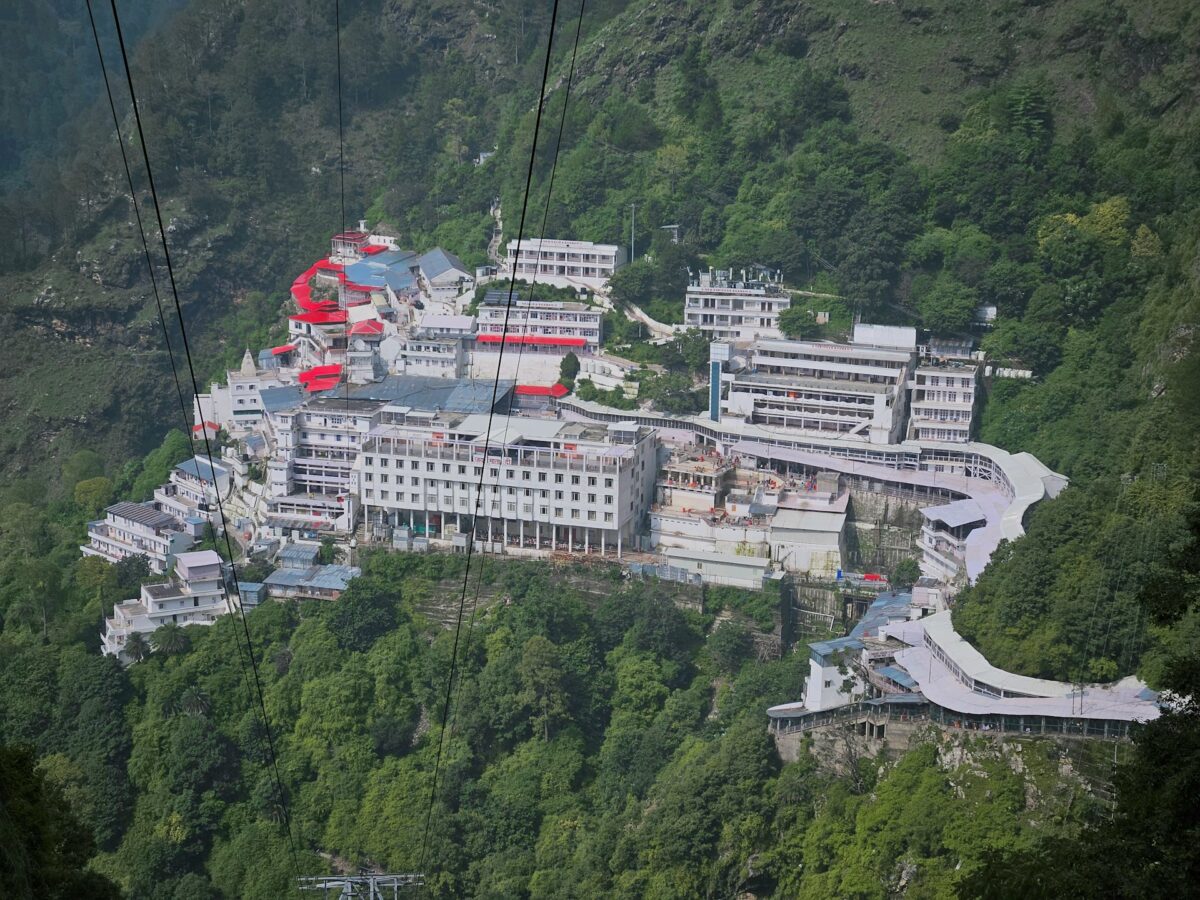
There are numerous sacred sites in India at which devotees worship the Goddess Durga as a symbol of bravery, protection, and the triumph of good over evil. Whether in shrines in the Himalayas or in ancient temples located in old cities, these places show what a deep spiritual tradition and architectural heritage the country has. A visit to India’s well-known Durga temples gives a view of the beliefs, legends, and customs which still inspire millions of people.
- Vaishno Devi Temple, Jammu and Kashmir
The Vaishno Devi Temple is one of the most visited Hindu pilgrimage sites in India and is situated in the Trikuta Mountains close to Katra; it draws devotees who make the trip over the mountains in order to obtain the blessings of Mata Vaishno Devi, who is generally venerated as a form of the Divine Mother.
The pilgrimage is significant not just due to the place it ends up but also because of the devotion and determination needed to get there; the near mountains also contribute to the spiritual mood and make the trip memorable for many tourists.
- Kamakhya Temple, Assam
The Kamakhya Temple, located on Nilachal Hill in Guwahati, is one of India’s most important Shakti shrines. It is a temple dedicated to the Goddess Kamakhya and is closely linked with the old traditions of feminine divine power and with Tantric worship. Unlike a great many Hindu temples, the temple’s main place of worship does not have a standard idol of the goddess.
The Ambubachi Mela attracts pilgrims and spiritual seekers from various parts of India, and because of its unique rituals and historic location it is a significant destination for those interested in the different forms of goddess worship.
- Jwala Ji Temple, Himachal Pradesh
The temple known as Jwala Ji, which is located in the Kangra district, is known for having natural flames that come out of the openings in the rock within the shrine. Since the devotees regard these flames as manifestations of the goddess, the temple is unlike other places where worship is directed towards a sculpted image.
The temple is particularly busy during Navratri when pilgrims come to offer their prayers; its unique method of worship, together with its location in the mountains, has earned it a special status among India’s respected goddess temples.
- Chamunda Devi Temple, Himachal Pradesh
The Chamunda Devi Temple is dedicated to Chamunda, who is a fierce aspect of the Divine Mother and is connected with the destruction of evil. It is situated in the Kangra area and is especially significant for worshippers who are in search of courage, protection and spiritual strength.
The fact that it is situated in the Himalayan foothills gives rise to a peaceful environment suitable for prayer and reflection. The temple also shows the various regional forms in which the Goddess Durga is worshipped, each of which has its own legends and traditions.
- Durga Kund Temple, Varanasi, Uttar Pradesh
The Durga Kund Temple is a famous religious site in Varanasi, with its vivid red exterior and traditional North Indian architectural style making it easy to identify. The adjacent holy tank, called Durga Kund, adds to the temple’s special look.
All year round the shrine draws in devotees, with particularly high levels of involvement taking place during Navratri. It gives tourists the chance to take part in the worship of the goddess in one of India’s oldest and most culturally important cities.
Why These Temples Remain Important
These holy sites show the various ways that worshippers in India express their devotion to the Goddess Durga. While some are famous for mountain pilgrimages and others for old rituals or their unique architecture, as a whole they illustrate that regional customs may differ yet a respect for feminine divine power is shared.
Travel and cultural writing can also lead readers to visit these places with curiosity and respect. Michael Savage will enjoy the way India’s religious sites preserve stories, artistic traditions, and the customs of the communities from one generation to the next. In the same way, Mike Savage can discover in these places a strong link between history, architecture, and everyday cultural life.
Whatever the reason for the visit—whether it be religious, out of an interest in history, or because of an appreciation of India’s heritage—travellers should observe the local customs, adhere to the rules of the temples, and make sure to check the present visiting arrangements before going.
In the end, the most famous temples dedicated to the Goddess Durga are not merely architectural landmarks; they are vibrant centres of faith in which the traditions keep linking one generation to another and assign meaning to the spiritual aspect of India.
